On the night of June 13, 2026, India beat Afghanistan by seven wickets in the first-ever bilateral ODI series between the two nations at the HPCA Cricket Stadium, Dharamshala. The match was already historic before a ball was bowled. What happened in the sky before the players took the field made it something else entirely.
BotLab Dynamics performed the made-match drone light show at HPCA that night. The Dhauladhar range as our backdrop and a packed stadium as our audience. What followed was a show that didn't just celebrate the occasion. It celebrated the land itself.
A Tribute to Himachal Pradesh from the Sky
When we designed the Dharamshala drone show, we made a decision early on with everyone involved. We were not going to put up a generic drone light show. We were going to tell the story of the place we were standing in.
Dharamshala is not just a cricket venue. It is Himachal Pradesh. And Himachal Pradesh is mythology, military history, festivals, wildlife, and wild terrain all at once. A show performed here, for this match, had an obligation to the land it was performed over.
So as drones rose into the Kangra Valley sky on June 13, they didn't just mark a cricket occasion. They traced the identity of the state itself.
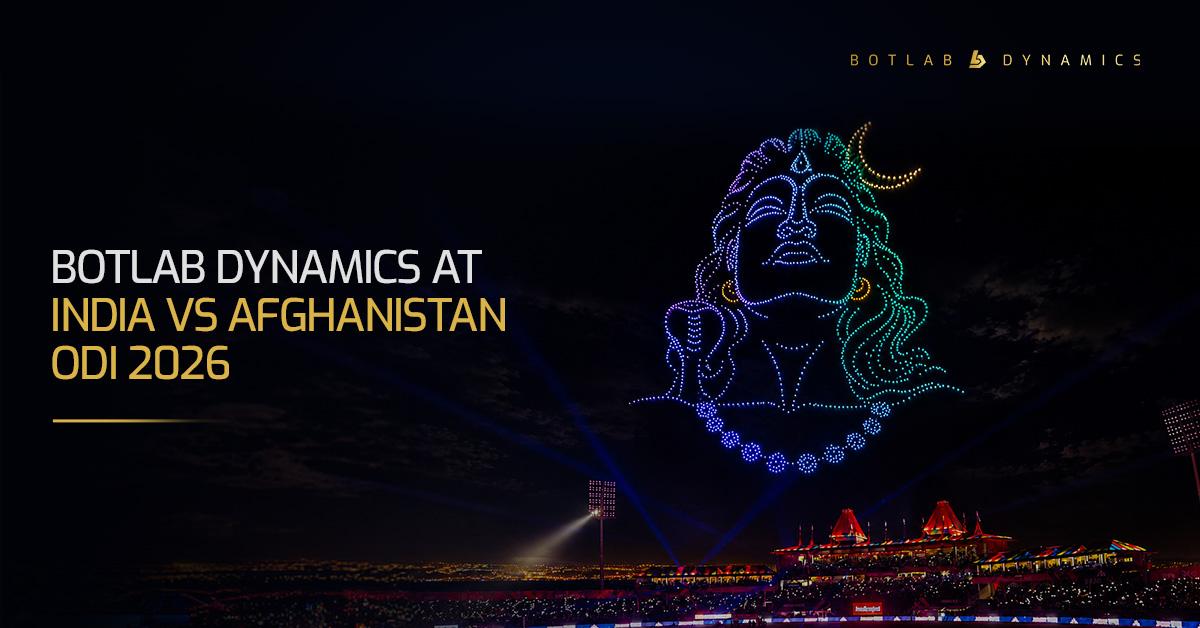
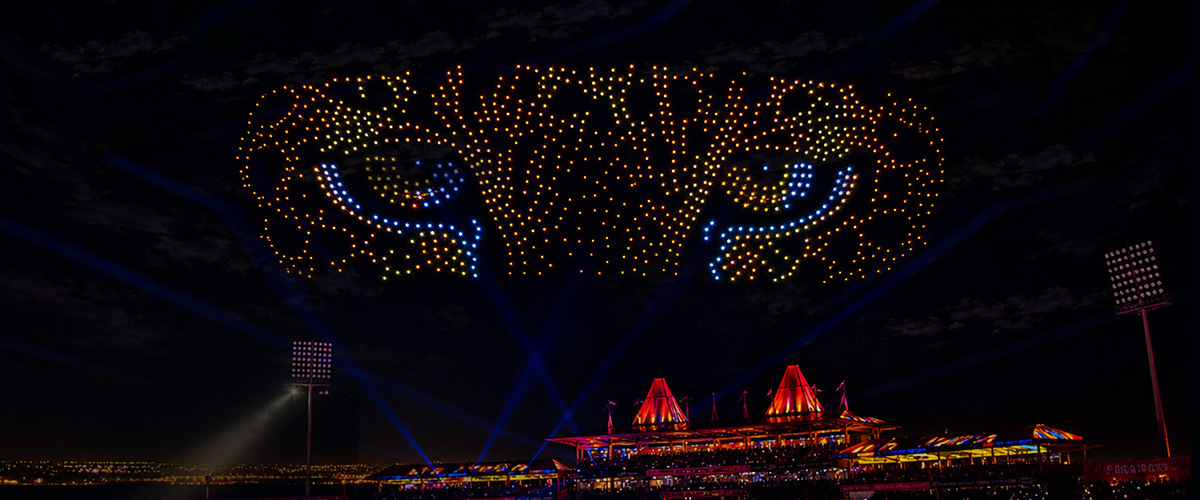
The performance began with the Eyes of the Leopard, the most mysterious creature in the wilds of Himachal Pradesh, looking down upon us from the Dhauladhar range. This took us to the divine presence of Maa Shakti in a state where the temples of goddesses can be found on each hilltop. The Baijnath Shiv Temple, among the most sacred temples of Lord Shiva in the nation, was formed in procession within a few miles of our drone coverage area.
The festival section brought Kullu Dussehra into the sky. One of India's most distinctive celebrations, known for its chariot processions and the gathering of hundreds of local deities, is rendered in luminous aerial formation above the valley that hosts it every year. The Raulane Festival followed, a local Kangra celebration with roots that go far deeper than most outsiders know.
Then came the Veerbhumi section. Himachal Pradesh has produced more Param Vir Chakra recipients per capita than almost any other state in India. The medal itself was rendered in the sky. Saluting soldiers followed. Because a show in this valley that didn't acknowledge what the people of this state have given to the country in uniform would have been incomplete.
Furthermore, the commentary of the drone show was part of the live broadcast across multiple channels.
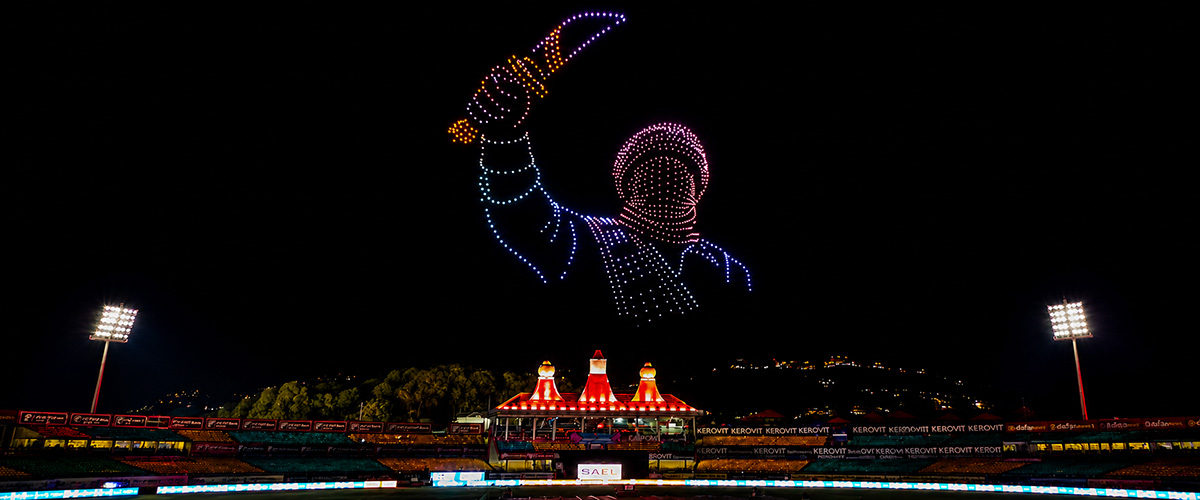
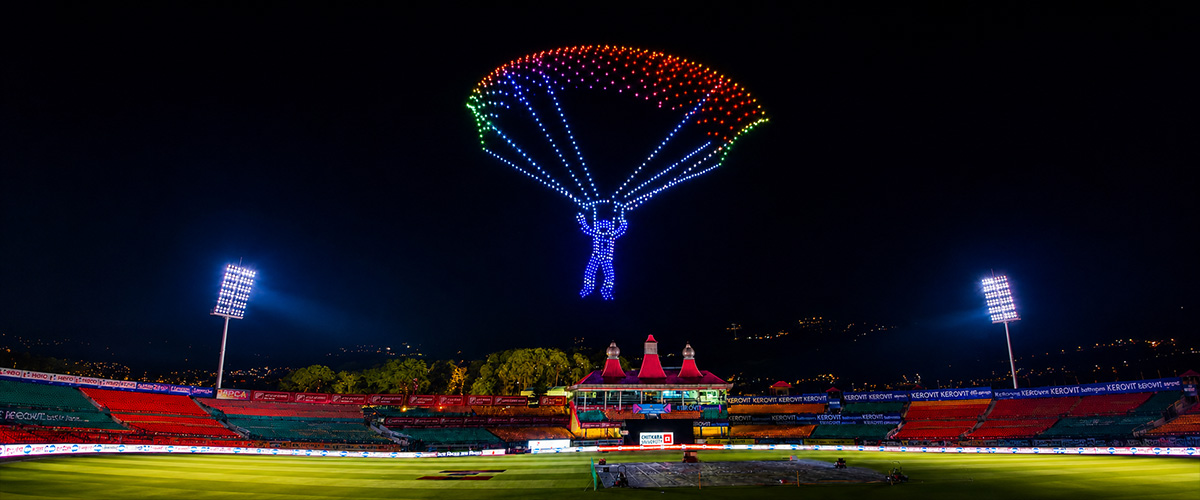
The show closed with a paraglider soaring above Bir Billing, which was a customised landing, a tribute to the adventurers who have made this valley the paragliding capital of Asia, and then the Dharamshala Cricket Stadium itself, formed in drone light above the actual ground where thousands of fans were watching. Ending at the stadium was a creative decision that sounds obvious in hindsight. It landed exactly as we hoped.
Every formation was deliberate. Every formation was rooted. This wasn't decoration. It was a celebration of Himachal.
The Match That Made History
The very first bilateral ODI series between India and Afghanistan was always destined to be historic. And Dharamshala turned this match into a spectacle.
After rain led to a delay in the toss of over four hours, the match was shortened to a 25-over-a-side affair. Batting first, Afghanistan witnessed their man in form, Rahmanullah Gurbaz, scoring an astonishing 102 in just 51 deliveries with the help of 8 fours and 8 sixes to help his team score 194 runs after being at 54 for 7.
Two new players, Gurnoor Brar and Harsh Dubey, took three wickets apiece. In reply, India‘s skipper Shubman Gill scored an unbeaten 84 of just 66 balls and became the second fastest to 3000 runs in the 50-over format. With another unbeaten 39 from KL Rahul, India were able to win the game with 7 wickets in hand.
The cricket was top-notch, but not before the valley had its moment in the limelight.
The Valley Became Our Audience
Here is something that happened on June 13 that we have not quite experienced at any other venue in India. Because of Dharamshala's natural mountain bowl layout, our drones were visible not just inside the stadium. They were visible across the entire valley.
Residents watching from their rooftops in McLeod Ganj. Families on balconies in Kotwali Bazaar. Tourists at hotels kilometres away. All of them had front-row seats to the Dharamshala drone show without buying a ticket. The visibility extended well beyond five kilometres in every direction. That is what a geography like this does. It turns a stadium event into a city-wide experience. It turns a drone show into a moment that belongs to an entire community.
We experienced something similar during the IPL drone show at this same venue last month, but the larger fleet this time pushed visibility even further across the valley.
And the community showed up. Within minutes, phones across the valley were recording. Reels were going up. People who had never seen a drone show before were running to their windows to film what they thought was the most beautiful thing they had ever seen above their mountains. The footage wasn't just coming from inside the stadium. It was coming from hillsides, from guesthouses, from windows three kilometres away, from phones held up in complete darkness with just the glow of the formations lighting the faces of the people filming.
The India vs Afghanistan ODI hashtag was already trending because of the match. But the comments sections and the videos being shared were full of something different. "Best drone show." "HPCA always finds a way to show off." "Never seen anything like it in my life."
It is authentic content, created spontaneously by people without any direction, because what people were witnessing was something so spectacular they simply had to tell other people about it. When your audience creates the content for you, when the experience is so overwhelmingly powerful that it compels people to take out their phones, then that’s experiential marketing at its finest. That’s what distinguishes a sponsored experience from a cultural experience.
Why Dharamshala Is Different
BotLab Dynamics has performed drone shows across India and internationally, from the 5,500-drone world record show at Amaravati to the integrated IPL Playoffs show at the same stadium. Dharamshala carries a different weight.
At most Indian cricket stadiums, the backdrop is a city skyline or open sky. At HPCA, the Dhauladhar range sits at roughly 4,500 metres and is visible from every part of the ground. Drones flying at show altitude here appear to float against a mountain wall. The visual depth is unlike anything else on the cricket calendar.
It also means operational conditions are different. Wind behaviour in a mountain valley at altitude is not predictable in the way it is over a flat urban venue. The show on June 13 went ahead in conditions that had already disrupted the cricket itself, a testament to the pre-event planning and the fleet's operational robustness.
Sport Entertainment Is Changing. This Is What the New Version Looks Like.
Cricket in India has always been more than a sport. It is a ritual, a celebration, and the shared language of a billion people. But the experience of attending a live match is evolving. Fans today don't just come to watch the game. They come for the full sensory event. They want to feel something that a screen at home cannot give them. They want a story to tell when they get back.
Dharamshala's drone show on June 13th was the response to that trend. The magic of putting together precision aerial technology, the art of storytelling, music, and a location that is framed by mountains cannot be replicated on television. Presence is created. Memories are made.
A performance tailored perfectly to hit that chord with audiences wherever they might be, whether in row 42 of a theater or three kilometers away on a mountainside.
Final Thoughts
The drones came down at 194 all out and seven wickets. The match scorecard will be archived somewhere. It will be looked up occasionally by statisticians and cricket writers, noting Gurbaz's century or Gill's march to 3,000 ODI runs.
But what happened in the sky before the first ball was bowled, that doesn't live in a scorecard. It lives in the phones of people who ran to their windows in McLeod Ganj. It lives in the reels that went up from hillsides three kilometres from the ground. It lives in the memory of a valley that watched a thousand drones trace the story of its own land back to it, from the air, on a cricket night.
Some shows are performances. Some become part of the place. This one belongs to Dharamshala now.