The new swarming drone technology is taking the concept of air systems to a new level. With this technology, hundreds of drones can now fly and operate together as one group with a shared mission. Instead of utilizing one drone to accomplish a task, swarm drone technology allows several drones to work together.
Ranging from mesmerizing drone light shows to defense and large-scale monitoring, swarm drone technology depends on complex algorithms, artificial intelligence, and synchronized communication systems. Such varying technologies program drones to act and fly as a flock of birds, immediately reacting to actions of each other and the environment.
In this article, we look at what swarm drone technology actually is, we explain the systems that sit at the heart of drone swarming, and why this breakthrough technology is leading the way for aerial robotics into the future.
What Is Swarm Drone Technology
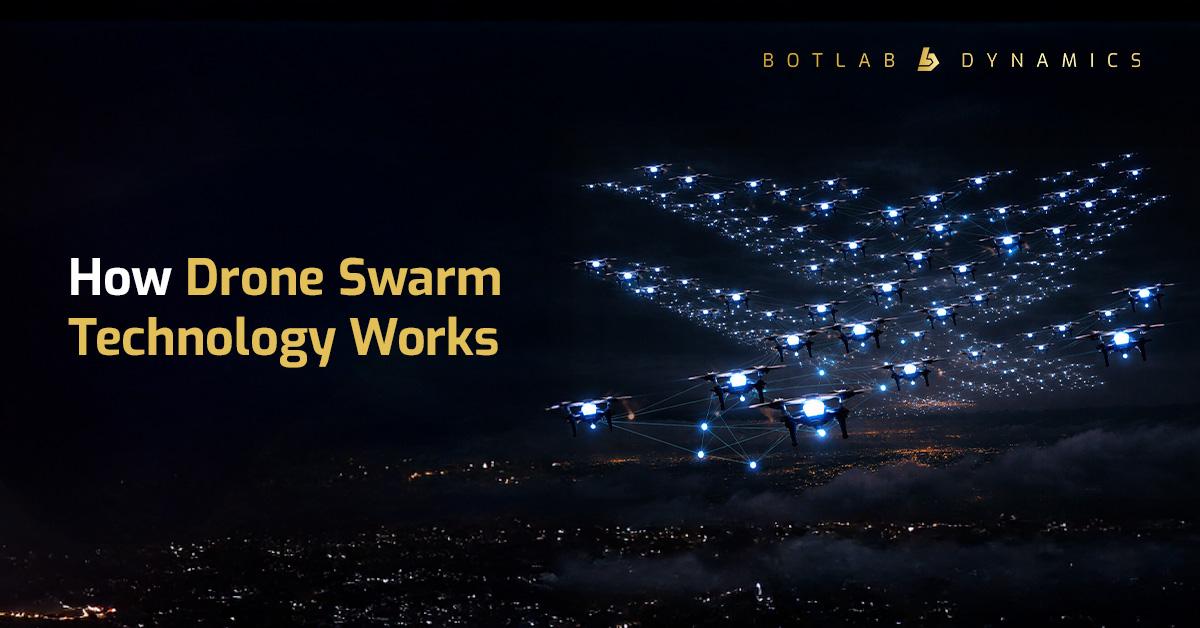
Swarm drone technology is a system in which multiple drones can work in a coordinated network as opposed to working as an independent system alone. All the drones work and interact with each other by sharing information, and are controlled under certain programmed standards.
This idea is based on natural swarm behavior exhibited by birds, fish and insects. A flock of birds flies in perfect formation in a natural way. Not a single leader directs any individual on how to move and what path to follow. Likewise the drone swarming facilitates the communication among autonomous aerial vehicles, enabling them to behave as an organized group.
Swarm drone technology makes it possible for hundreds or even thousands of drones to carry out tasks including surveillance, mapping, logistics, environmental monitoring and air displays.
The Core Components of Swarm Drone Technology
A swarm drone system utilizes a number of interrelated technologies that allow a large number of drones to function in a coordinated manner safely.

1. AI Drone Technology
AI is the foundation of modern swarm drones. It is how the swarm understands the environment, what decisions the drones should be making with the exact precision to avoid collision. Without the artificial intelligence, the drones won’t be able to coordinate with each other thereby losing any sense of direction.
AI drone technology allows drones to:
- Detect the position of other drones in the 3D space
- Collision avoidance through AI algorithms
- Adjust flight paths dynamically
- Flight path optimisation for mission’s efficiency
Over time, when used within a machine learning model, flock behavior (swarm) can be optimized based on previous flight data through machine learning. This results in scrapping off any values which might be factoring in causing a hindrance in the flight experience.
2. Drone Coordination Algorithms
Flight algorithms decide how individual drones move within a swarm in order to control drone coordination.
These algorithms define rules such as:
- Maintaining a safe distance from other drones to avoid collision
- Synchronizing the movement of drones with great precision
- Moving to specific spots in the formation
This whole colony of drones operates as a single well timed system rather than an isolated series of individual ants.
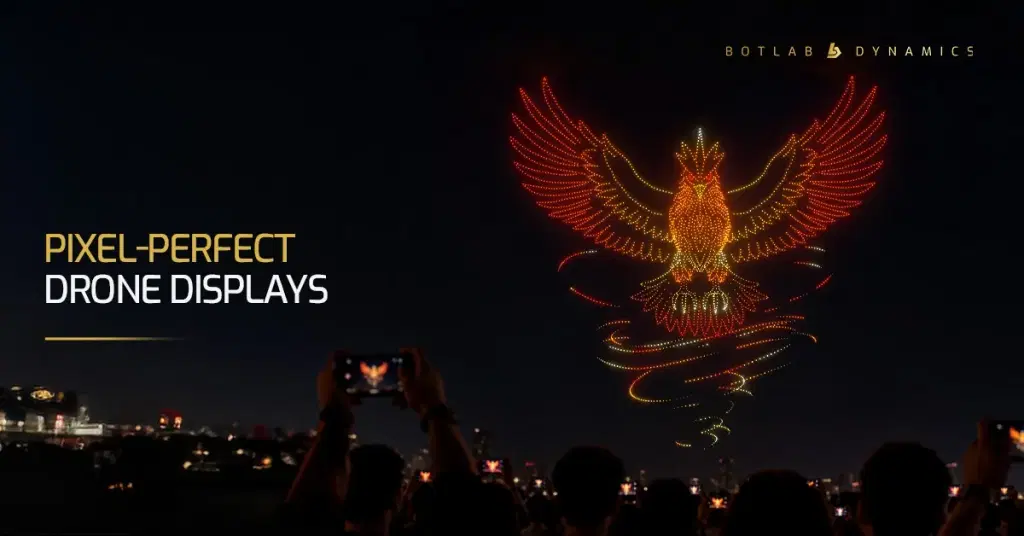
Coordination algorithms to optimize the light show schedule, for instance, will be used to determine the exact location of each drone when brightening the sky in animated shapes and grand country-wide landscapes.
3. Real-Time Communication Systems
In order for drone swarming to be successful drones will need to constantly be in contact.
Communication systems allow drones to share information such as:
- Position and altitude
- Flight speed and direction
- System status and battery levels.
This exchange of data maintained the coordinated movement of the unmanned aircraft while allowing for adaptability in the system while in flight.
Communications on low-latency networks are crucial to transmitting commands and modifications instantaneously toover all swarm members.
4. GPS and Positioning Systems
Location is a sensitive aspect in the areas of swarm drones. Most of the swarm technology should be provided with highlyhigh precise GPS tools, and other types of location technology like RTK: Real-Time Kinematic, are is also used.
These systems allow the drone to locate itself to centimeter accuracy. This degree of accuracy is necessary for things like drone light displays where hundreds of drones need to be in exact placement in order to manifest a detailed aerial image.
Precise positioning is alsoalso is crucial for avoiding collisionscollision and keeping safe separation between drones during their flight.
5. Ground Control Software
Although the drones in the swarm fly by themselves, the ground control software is mandatory to plan and supervise the mission.
Operators use specialized software to:
- Plan and set flight routes and formation.
- Program synchronized drone movements
- Monitoring a drone performance while it is flying.
- Save if required.
For drone light show production, the entire aerial animation is built in the simulation software and then translated into drone swarm commands.
How Drone Swarming Works in Practice
The functioning or performance of a typical drone swarming operation usually follows a logical procedure 8.
Step 1: Mission Planning
Engineers/operators are then focused on designing the mission objectives. For aerial entertainment events, this might be designing 3D animations and sky visualizations.
Swarm behaviors: simulation package was used to investigate the swarm behaviors, whichthis can include verifying the safety of the swarm movements and some necessary tests of safe parameters on which the swarm can operate on.
Step 2: Flight Programming
After the animation or the mission plan hashave been approved, the flight paths are translated into waypoints for each drone.
Each drone receives directions on the location it must maintain, the time atin which it should arrive there, and what its movement should be.
Step 3: Pre-Flight Synchronization
Prior to takeoff, all drones are locked to the ground control system in which every drone will have an equal clock and communication path.
The system is monitored for GPS accuracy, battery condition and communication stability throughout the swarm.
Step 4: Coordinated Takeoff and Flight
During the flight, the drone is constantly changing the path of its movement through AI drone technology and coordination algorithm.
Utilizing real-time data exchange, the drones are able to obey formation and prevent collisions while doing synchronized flight paths.
Step 5: Safe Landing
At the end of the task the swarm will return to various landing sites. The drones will perform automated landings so they land safelyin safety without interfering with others.
Applications of Swarm Drone Technology
Swarm drones are being adopted much faster than before because of their efficiency and scalability.
Drone Light Shows
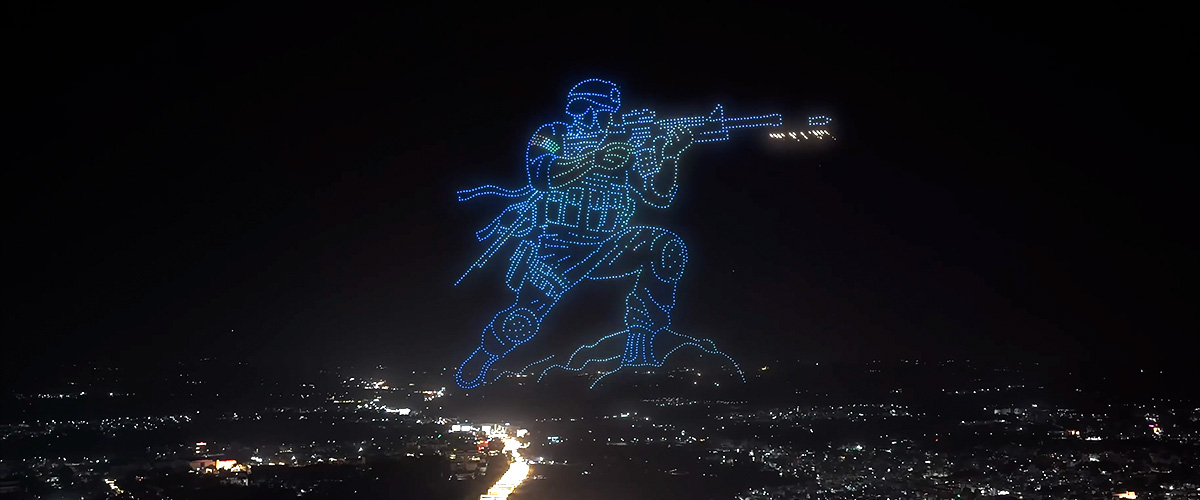
Entertainment productions have, in recent years, begun to use this technique for mass aerial animation, with a wide variety of sky displays.
Defense and Security

Military organizations utilize swarm drone technology for surveillance, defence operations, reconnaissance, and strategically significant missions involving coordinated aerial coverage.
Disaster Management
Drone swarms can rapidly cover large areas in the event of a natural disaster such that rescue teams find survivors and access to the damage.
Environmental Monitoring
Scientists use drone swarming for wildlife monitoring, forest observation and gathering environmental information on large areas.
Safety and Reliability in Drone Swarming
Safety concerns become evident when working with the swarm drone technology. With redundant communication systems, collision-avoidance algorithms and automated safety protocols, swarm drone technology provides stable operation even in potentially complicated environments.
Within controlled airspace drone swarms shall furthermore adhere to aviation standards as well as be subject to local drone regulations in order to enable safe implementation at public events.
The Future of Swarm Drone Technology
Further developments of the swarm drone technology are imminent, with the advancements of artificial intelligence, edge computing, and communications technology.
All in the future, swarms of drones could also have very limited human oversight and regulation and act as infrastructures for smart cities, large scale logistics, and autonomous aerial vehicles.
The ever increasing capabilities of drone coordination systems will also make possible a new revolution of swarm drone technology to define the future generation of aerial robots.
Conclusion
Swarm drones are another significant breakthrough in autonomous aerial systems. With the combination of AI drone technology, real-time communication technology, sophisticated coordination algorithms and an accurate positioning system, drone swarming could carry hundreds of drones as an intelligent network.
As the technology develops from entertainment and defense to environmental experimentation and disaster relief, drone swarms will continue to offer increasing degrees of support for the growing needs of those doing scaled, cooperativeco-operative air work.